
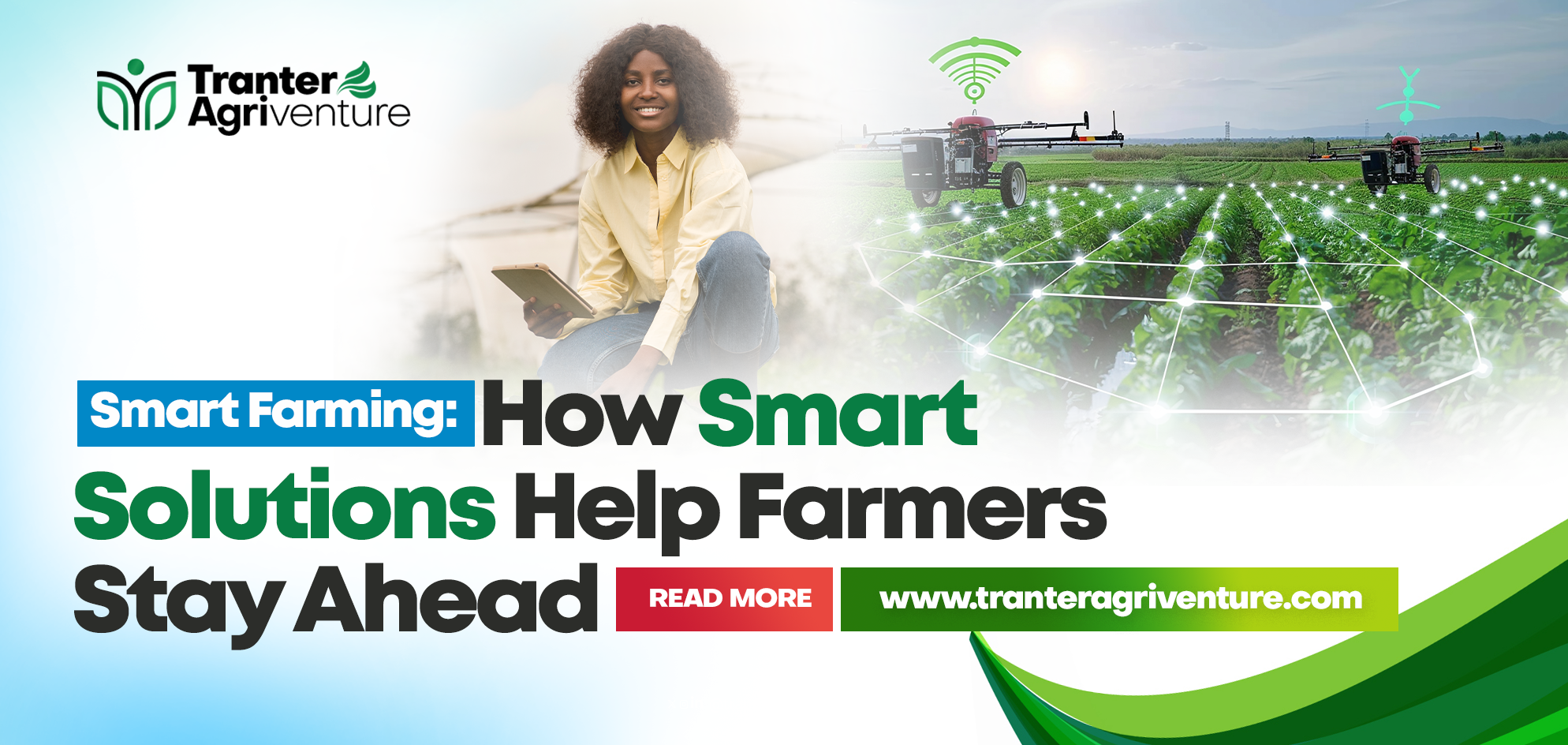
A farmer can do everything right and still face a difficult growing season. Smart Farming gives farmers a clearer way to monitor changing conditions, identify risks early and make informed decisions before small problems become larger ones.
Rain may arrive later than expected. Soil moisture can fall quickly during extreme heat. A pest outbreak can spread before there are visible signs across the field. Meanwhile, an irrigation system can fail when the farm needs it most.
The problem is not always a lack of experience or effort. Often, it is a lack of timely information.
With practical Smart Solutions, farmers can monitor their fields, equipment and resources in real time. They can identify changes earlier and take action before those changes affect productivity.
The goal is simple: turn useful information into timely action.
The Challenge: Agriculture Does Not Wait
Agriculture has always involved uncertainty. However, climate variability is making that uncertainty harder to manage.
Across Africa, farmers face drought, flooding, changing rainfall patterns and periods of extreme heat. These conditions can affect soil moisture, crop health, water availability and farm productivity.
The World Bank is supporting climate-smart agriculture technologies across several African countries to help farmers and livestock keepers predict and prepare for climate-related events. The initiative also aims to connect climate information with practical response measures.
For farmers, these challenges are not abstract.
Consider a field during a period of intense heat. The crops may still appear healthy while moisture levels in the soil are falling. By the time visible signs of stress appear, the farmer may have less time to respond.
The same issue can occur with equipment.
An irrigation pump may begin operating inefficiently. A storage facility may develop unsuitable temperature or humidity conditions. A tractor may experience an issue that affects productivity.
Without continuous monitoring, these problems can remain hidden until they cause disruption.
This creates a familiar cycle: observe the problem, react to it and deal with the consequences.
Smart farming offers another approach.
The Insight: Better Visibility Leads to Better Decisions
The value of technology in agriculture is not simply the amount of data it can collect.
The real value comes from knowing what is changing, when it is changing and what action may be required.
The World Bank has highlighted the importance of timely and location-relevant information, including weather information and early warnings, in helping African farmers respond to climate variability and extreme weather events.
This creates an important shift.
Instead of waiting for a problem to become visible, farmers can monitor conditions continuously and respond to early warning signs.
For example, soil sensors can detect that moisture levels are dropping faster than expected. A monitoring platform can then send an alert. The farmer can investigate the affected area and adjust irrigation before crops begin to show widespread stress.
The technology does not replace agricultural expertise.
Instead, it gives farmers better information to support the decisions they already make.
That is one of the central ideas behind Smart Farming.
How Smart Farming Supports Proactive Agriculture
Smart farming combines agricultural knowledge with technologies that help farmers monitor conditions and make informed decisions.
These Smart Solutions can support different areas of farm operations, from soil and water management to equipment and environmental monitoring.
Soil Sensors: Seeing What the Crop Cannot Tell You
A field can look healthy while soil moisture is already falling.
By the time crops show visible signs of water stress, the farmer may have less time to respond. Soil sensors help close this visibility gap.
Soil moisture sensors measure moisture conditions within the soil and provide data that farmers can use to understand changes over time. This information can support more informed irrigation decisions.
For example, during a period of extreme heat, soil moisture may decline faster than expected. Instead of discovering the problem after crops begin to wilt, a Smart Solution can identify the change earlier.
The farmer can then check the affected area and determine whether irrigation needs to be adjusted.
This is not simply about collecting more data. It is about getting useful information early enough to act.
Research from UNH Cooperative Extension supports this practical use. In a field project involving eight farms, growers used soil moisture sensors to better understand irrigation frequency and duration. The project also found cases where sensor readings revealed irrigation problems and helped growers avoid unnecessary watering.
Read the UNH Cooperative Extension research on soil moisture sensors
For African farms dealing with water stress and unpredictable weather, soil sensors can therefore become an important part of a wider Smart Farming strategy.
Intelligent Irrigation: Using Water More Precisely
Water management is another area where timely information matters.
Traditional irrigation schedules often rely on fixed timings. However, soil and weather conditions can change throughout the day.
Smart irrigation can use information from soil sensors and environmental monitoring devices to help farmers determine when irrigation is actually needed.
Instead of watering simply because a schedule says it is time, farmers can consider current soil conditions.
Therefore, irrigation becomes more responsive to what is happening on the farm.
This approach can help farmers manage water more carefully while supporting healthier crop conditions.
Equipment and Asset Monitoring
Crops are not the only things that require attention.
Farms depend on tractors, irrigation pumps, generators, storage facilities and other assets. When one of these assets fails, the impact can extend beyond the equipment itself.
Smart monitoring can provide visibility into the condition, location or operating status of critical assets.
Farm teams can then identify unusual activity, investigate potential problems and plan maintenance before a failure causes significant disruption.
This creates a more proactive approach to managing the infrastructure behind agricultural operations.
Weather and Environmental Monitoring
Weather can influence almost every stage of farming.
Rainfall, temperature and humidity can affect soil conditions, crop health, irrigation requirements and other farm activities.
Environmental monitoring can provide farmers with a clearer picture of these changing conditions.
Combined with other farm data, this information can help farmers prepare for changing weather rather than simply reacting to it.
The World Bank’s climate-smart agriculture work in Africa reinforces the importance of connecting climate information with actionable responses.
The result is more than a collection of weather readings.
It becomes information that can support practical decisions.
Making Smart Solutions Practical for Farmers
There is an important difference between collecting data and making data useful.
Farmers should not need to interpret complicated dashboards or technical terminology before they can act.
A well-designed Smart Solution should make information easier to understand.
For example:
Data: Soil moisture is falling.
Insight: The affected area may be approaching water stress.
Action: Check the irrigation system and determine whether additional watering is required.
That progression is important.
The technology should work quietly in the background while farmers remain focused on their land.
This also matters for adoption. Digital agriculture can offer significant opportunities, but infrastructure, skills, affordability and access can affect how effectively farmers use new technologies.
For that reason, the best Smart Solution is not necessarily the one with the most features.
It is the one that solves a real problem without creating another one.
A Simple Scenario: From Reaction to Prevention
Imagine a commercial farm entering a period of unusually high temperatures.
Under a traditional approach, the farm team may inspect the crops regularly. They may eventually notice signs of stress and begin investigating the cause.
By then, soil moisture may already have fallen significantly.
The team checks the irrigation system, identifies the affected area and takes corrective action.
Now consider the same situation with Smart Solutions.
Soil sensors detect that moisture levels are declining faster than expected. The system sends an alert. The farm team checks the affected area and reviews the irrigation system.
If irrigation is needed, the team can act earlier.
The difference is not that technology has replaced the farmer.
The farmer still makes the decision.
The difference is that the decision is supported by information that arrives sooner.
That can turn a reactive response into a proactive one.
Building More Resilient Farms With Smart Solutions
Agriculture will always involve uncertainty.
No technology can prevent drought, eliminate pests or control the weather. However, farmers can become better prepared to respond to changing conditions.
That is where Smart Farming has an important role to play.
Smart Solutions can provide visibility across soil conditions, irrigation, environmental factors, equipment and other critical areas of farm operations.
For example, we offer Smart Agriculture and Precision Farming solutions alongside soil monitoring, intelligent irrigation, tractor monitoring and silo monitoring. Its soil monitoring solution uses smart sensors to track factors such as moisture, nutrients and pH to support crop decisions.
Explore Tranter AgriVenture’s Smart Farming Solutions
The goal is not technology for technology’s sake.
It is about giving farmers greater visibility into the conditions that influence their operations.
More importantly, it is about helping them turn information into timely action.
For agricultural businesses, this means moving beyond simply asking, “What happened?”
The better question is:
“What is changing, and what can we do about it now?”
That shift sits at the heart of Smart Farming.
The future of agriculture will not depend on technology alone. It will depend on how effectively technology works alongside farmers, their knowledge and the realities of their environment.
When Smart Solutions are practical, accessible and built around real agricultural needs, they can give farmers something increasingly valuable: better visibility, earlier warnings and greater confidence in the decisions they make.
Smart Farming is not about replacing the farmer. It is about giving farmers better information to stay one step ahead.